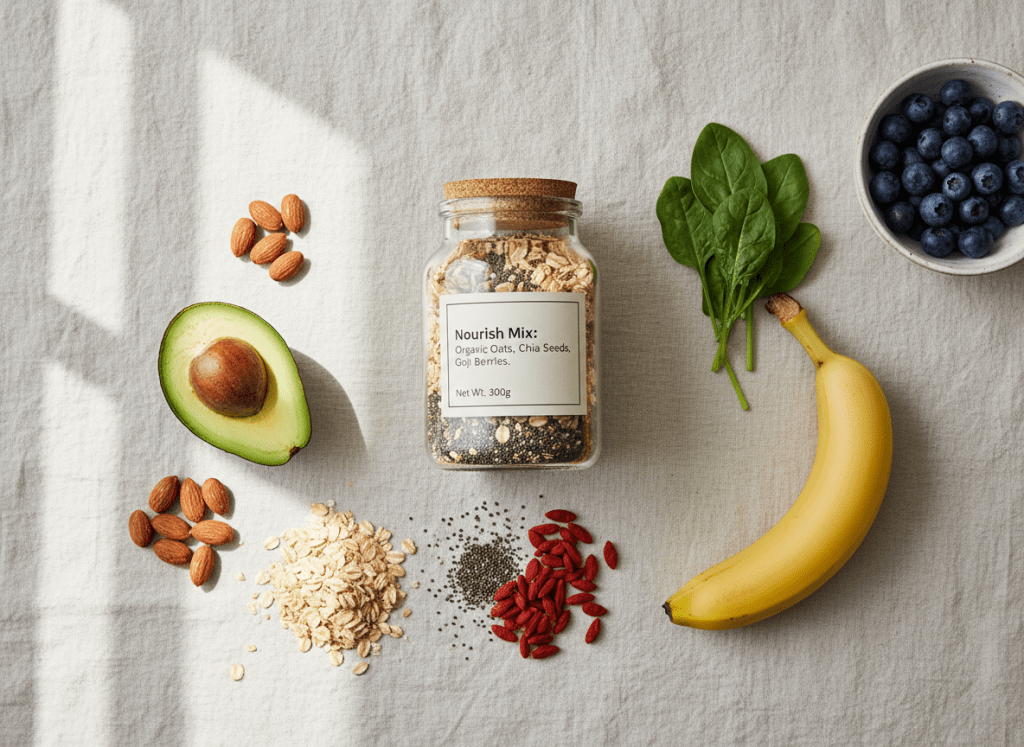
Standing in the grocery store can feel overwhelming. One product claims it’s natural, another says made with whole grains, and another promises it’s healthy. It seems like every package is trying to convince you it’s the best choice.
So how do you know what’s actually inside?
The answer is surprisingly simple: learn to read the ingredient label.
The good news is that you don’t need a nutrition degree or hours of research to make better choices. Once you know what to look for, reading labels becomes second nature.
If you’re just getting started, check out my guide to 25 Easy Healthy Swaps for a Healthier Home for simple changes you can begin making today.
At One Simple Swap, we believe healthier living isn’t about perfection—it’s about making informed decisions, one simple swap at a time.
Why Ingredient Labels Matter
Food packaging is designed to sell products.
Bright colors, health claims, and catchy phrases are meant to grab your attention. While some of those claims are accurate, they don’t always tell the whole story.
The ingredient list gives you a much clearer picture of what you’re actually buying.
Instead of focusing on what the front of the package says, flip it over and start with the ingredients.
Ingredients Are Listed by Weight
One of the most helpful things to know is that ingredients are listed from the greatest amount to the least.
That means the first few ingredients make up most of the product.
For example:
Bread A
- Whole wheat flour
- Water
- Yeast
- Salt
Bread B
- Enriched wheat flour
- Sugar
- High fructose corn syrup
- Vegetable oil
Even before reading the Nutrition Facts panel, you already have a better understanding of what’s inside each loaf.
The first few ingredients tell an important story.
Don’t Panic If You Can’t Pronounce Everything
You’ve probably heard someone say,
“If you can’t pronounce it, don’t eat it.”
While it’s catchy advice, it isn’t always accurate.
Some perfectly safe ingredients have scientific names that sound intimidating.
For example:
- Ascorbic acid = Vitamin C
- Tocopherols = Vitamin E
- Xanthan gum = a common thickener
Rather than avoiding every unfamiliar word, try learning what the ingredient actually is.
Understanding ingredients is far more helpful than judging them by how they sound.
Fewer Ingredients Doesn’t Always Mean Healthier
Another common myth is that shorter ingredient lists are always better.
Sometimes that’s true.
For foods like peanut butter, yogurt, or frozen vegetables, a short ingredient list often makes sense.
However, foods like whole-grain bread, soup, salsa, or pasta sauce naturally contain several ingredients.
Some foods naturally have very few ingredients, like:
Instead of counting ingredients, ask yourself:
- Do I recognize most of these?
- Does this fit my family’s goals?
- Is there another option with fewer unnecessary additives?
Learn the Different Names for Added Sugar
- Plain Greek yogurt
- Peanut butter made from peanuts and salt
- Frozen vegetables
For example, when I’m shopping for a peanut butter, I usually look for one made with just peanuts (and sometimes a little salt). Justin’s Classic Peanut Butter is a great example of a simple ingredient option.
One thing that surprises many shoppers is how many different names sugar can have.
Some common examples include:
- Cane sugar
- Brown rice syrup
- Corn syrup
- Dextrose
- Maltose
- Coconut sugar
- Honey
- Maple syrup
- Agave syrup
You don’t need to eliminate every source of added sugar.
Instead, compare similar products and choose the option that works best for your lifestyle.
Remember, healthier choices are built over time—not overnight.
Compare Products Instead of Looking for “Perfect”
One of the easiest habits you can develop is comparing two similar products.
Let’s say you’re buying pasta sauce.
Instead of grabbing the first jar you see, compare:
- Ingredients
- Added sugars
- Sodium
- Fiber
- Protein
Sometimes the differences are surprisingly small.
Other times you’ll find one option that contains fewer added ingredients while tasting just as good.
Those are the kinds of simple swaps that add up over time.
I also keep a good extra virgin olive oil in my pantry for every day cooking and salad dressings.
If you’re ready to take the next step, my guide on How to Create a Healthier Pantry on a Budget shares affordable ways to stock your kitchen with healthier every day staples.
Don’t Be Fooled by Marketing Buzzwords
Words like:
- Natural
- Farm Fresh
- Wholesome
- Premium
- Healthy
- Made with Real Fruit
sound reassuring.
But these phrases don’t always tell you much about the overall product.
Whenever possible, let the ingredient list—not the marketing—guide your decision.
Progress Is Better Than Perfection
If you’re just beginning your healthier living journey, don’t feel like you need to clean out your pantry overnight.
Small changes are far more sustainable.
Maybe today you choose bread with whole grains listed first.
Next week you choose a pasta sauce with less added sugar.
Next month you swap vegetable oil for avocado oil.
One of my favorite pantry upgrades was switching to avocado oil for high-heat cooking. If you’re looking for a quality option, this is the avocado oil I keep on hand.
Some of the small changes I’ve made have become permanent habits. You can read about them in 25 Clean Swaps I Made That I’ll Never Go Back To.
Those small decisions become lifelong habits.
My Simple Approach to Grocery Shopping
When I’m trying a new product, I usually ask myself four questions:
✔ What are the first three ingredients?
✔ Does this fit the way I want to eat?
✔ Is there another option with simpler ingredients?
✔ Will my family actually enjoy it?
That’s it.
Shopping doesn’t have to be complicated.
Once I find products I love, I transfer many pantry staples into clear glass storage containers. They keep everything organized and make healthy choices easier to see.
Frequently Asked Questions
Is it bad if I can’t pronounce an ingredient?
Not necessarily. Many vitamins and naturally occurring ingredients have scientific names. It’s better to understand what an ingredient is than judge it by how it sounds.
Are ingredients always listed in order?
Yes. In the United States, ingredients are listed from the greatest amount to the least by weight.
Should I avoid processed foods completely?
No. Many minimally processed foods can absolutely be part of a balanced lifestyle. The goal is making informed choices—not eliminating every packaged food.
What’s the first thing I should look at?
Start with the ingredient list. The first few ingredients often tell you more than the marketing on the front of the package.
Continue Reading
If you found this helpful, here are a few more posts you might enjoy:
- 25 Easy Healthy Swaps for a Healthier Home: A Beginner’s Guide
- How to Create a Healthier Pantry on a Budget
- 25 Clean Swaps I Made That I’ll Never Go Back To
- Why We Started One Simple Swap: A Realistic Approach to Healthier Living
Final Thoughts
Reading ingredient labels doesn’t have to feel overwhelming.
The more you practice, the faster it becomes.
Soon you’ll find yourself naturally comparing products and making choices that align with your family’s goals without spending extra time in the grocery store.
Remember, healthy living isn’t about getting everything right.
It’s about making one simple swap at a time.
 One Simple Swap | Healthy Home & Clean Living
Leave a comment